
by Gloria Welton
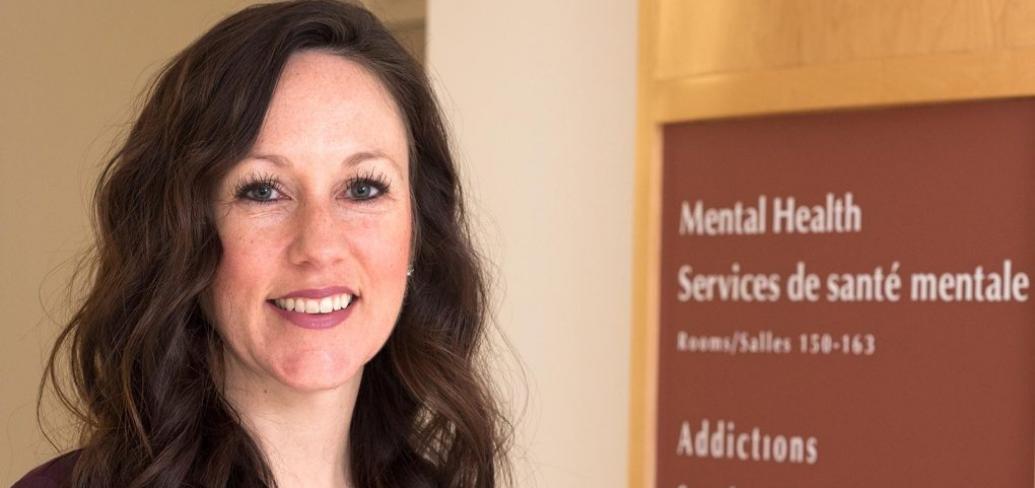
Lorna Hutt, Director of Community Programs for Mental Health and Addictions with Health PEI, recently gave The Employment Journey staff great insight into why careers in this field are vast, rewarding, and always evolving.
Lorna oversees the community mental health and substance use programs in community health facilities across the province. The offices are in Alberton, Summerside, Charlottetown, Montague, and Souris. Bilingual services are available in some locations.
“Our clinicians across the province work with children, adolescents, adults, and seniors,” says Lorna.
The first step in service is calling or dropping in at one of the offices. From there, a clinician helps determine which programs and services are best suited to the individual’s needs. Once the individual’s needs are screened, they may be linked to one of the following mental health services:
- A community mental health and/or substance use specialist (nurse, social worker, occupational therapist, psychologist or psychiatrist) who can work with the client to assess their condition. Together the client and the professional identify the treatment plan, program, and services that will work best to meet needs and reach goals.
- A group treatment education program is an option for some mental health conditions such as anxiety or depression.
- “Some Community Mental Health Services are more specialized and have criteria to access services. These may include the Seniors Mental Health Resource Teams, Outreach Teams and several group treatment programs.”
- The Operational Stress Injury site is a program in Stratford for staff from the Canadian Armed Forces and RCMP who have mental health and substance use concerns.
- The Insight Program is an intensive day program for adolescents with serious and persistent mental health concerns.
- “We also have Student Well-being teams in all of the schools across the province that have mental health staff, social workers, nurses, and justice youth workers.”
About the staff
About 600 staff work within Mental Health and Addictions across PEI. Lorna’s team of about 300 staff consists of the following:
- Psychiatrists
- Psychologist
- Mental Health Nurses
- Social Workers who are Mental Health Therapists
- Addictions Counsellors
- Addictions Workers who work within an opioid agonist treatment program and a withdrawal management program.
- Licensed Practical Nurses
- Occupational Therapists
“The teams are very multidisciplinary, which is important when determining how best to support the client.
“For example, a nurse on the team might do a holistic assessment on the client’s mental health, and another team member could take into consideration the impact of the client’s medications on their physical health.
“The Student Well-Being teams work in schools with children and adolescents from grade one to 12. They also work with their families. A lot of that work, especially with the younger kids, can’t be done without the families being involved.”
Lorna says Health PEI and the PEI government overall have been very supportive toward the enhancements and the expansion of mental health and substance use services across the province.
“We certainly want to keep improving and ensuring our services are evidence-based to provide the best type of care.”
Healthcare career opportunities overall
Physicians – PEI has many opportunities for Physicians in family practice and in a variety of specialty areas such as Emergency Room Physicians, Psychiatrists, Anesthetists, Psychiatrists, and Internists, to name a few. Also, opportunities are available for Associate Physicians and Physician Assistants.
Nursing – Many nursing positions are available across PEI in areas such as Nurse Practitioner, Registered Nurse, and Licensed Practical Nurse.
Also, there is a demand for Patient/Resident Support Services including Resident Care Worker (RCW), and Patient Care Worker (PCW).
Allied health professionals are also in demand. Those careers include Social Workers, Social Service Workers, Behavioural Therapists, Occupational Therapists, Occupational Therapist Assistants, and Physiotherapists, Pharmacists, Pharmacy Technicians, Clinical Chemists, Medical Laboratory Technologists, Medical Physicists, Psychologists, and Registered Midwives.
Positions that are difficult to fill
“Our social work, psychology, and nursing positions are all hard to fill. We are trying to get creative about how we fill the positions and make the organization a place where people want to work.
“There has been a lot of work around employee engagement. It is important to management to hear from staff about why they like their job and what would make their job better.”
Volunteer opportunities
“Our volunteer opportunities in mental health and addictions are a great way to explore various areas of work.
“The Volunteer Coordinator, who works out of the Hillsborough Hospital, can coordinate volunteers throughout the division. That is a relatively new position within the last three years.” For more about volunteer opportunities, click here.
New positions created
Lorna says they are in the midst of developing a Peer Support Worker job classification. “That will be a brand-new discipline for Health PEI. They will be in place to support the clients in the system.
“We are recruiting for a Peer Support Coordinator position. The person in that role will be instrumental in developing the mental health and addictions model and recruiting Peer Support Workers. Other provinces in Canada have that role defined and active and have found the model to be helpful.
“This role is geared towards hiring someone who has experienced mental health and/or substance use services but is at a place in their life where they have met a lot of their goals and is managing well. They would complete training specific to being a Peer Support Worker.
“The intent is to have Peer Support Workers on our teams across the province.”
Lorna Hutt’s career pathway
Lorna has a Bachelor of Social Work and a Master of Social Work.
“I worked in mental health and addictions back in the early 2000s but wasn’t able to get a permanent position because there were no jobs in the field on PEI at the time.
“So, I moved out to Alberta and did my Bachelor of Social Work through distance education. I then worked frontline as a therapist for several years and then started doing some supervisory roles. I earned my Master of Social Work and moved into management.
“My husband and I wanted to move back to PEI, and there was an opportunity for a frontline position. This was my foot in the door after being away for 13 years.
“I worked at the frontline position for a year and then moved into management. In the last few years, I have been in the director role. It is interesting to see the changes in the workforce. I had to move to the other end of the country to get a job back home, but it served me well and gave me lots of great experience to bring back to PEI.”
How to make connections to the profession
“We get a lot of requests for students to do their job placement in this field of work. It is a great way for us to coach, mentor, and support students, and the students get great work experience.
“Graduates interested in this field who need further training can use a support within mental health and addictions called Research and Education. This team helps new and existing staff get the proper training.
“We want to work with staff so that they feel supported and well prepared to do the work.”
How to apply
All positions are posted on Jobs PEI.
“The hiring manager, along with someone from mental health and addictions and the Public Service Commission sit in on the job interviews,” says Lorna.
Some shiftwork is required to staff the offices, which are open until 8 pm a few days a week and some Saturdays and Sundays.
FOR THOSE NEEDING MENTAL HEALTH SERVICES
· Call the Mental Health and Addictions phone line at
1-833-553-6983 (toll-free). Calls are answered by trained mental health professionals 24 hours a day, seven days a week.
· Contact the Mobile Mental Health Response Service. A team of trained health care professionals can provide in-person care when situations require more than phone-based support. This service is available via the Mental Health and Addictions phone line at 1-833-553-6983 from 10 a.m. to 10 p.m. daily.
· Visit Open Access Counselling. Walk in to speak with a mental health or addictions counsellor in person. No appointment or referral required.
· For a life-threatening emergency, call 9-1-1
CONTACT THE MENTAL HEALTH AND ADDICTIONS PATIENT NAVIGATOR:
· Telephone: 902-218-3289
· Email: MHApatientnavigator@ihis.org
FOR LISTS OF MENTAL HEALTH AND ADDICTIONS PROGRAMS
· Mental Health Support and Services
· Help for Addiction and Substance Use